The post What Your O-Level Maths Mistakes Reveal About Your Problem-Solving Habits appeared first on Educational Star.
]]>Careless Calculation Errors
Small arithmetic slips are often dismissed as bad luck, but frequent ones usually reflect how a student works under pressure. These mistakes commonly point to the following habits:
- Rushing through early steps to save time for harder questions later in the paper.
- Doing calculations mentally instead of writing intermediate steps down.
- Skipping a final check, such as substituting the answer back into the equation.
- Copying numbers incorrectly from one line of working to the next.
- Using the calculator without estimating whether the answer is reasonable.
- Expanding and simplifying expressions too quickly, which leads to dropped negative signs or brackets.
Misreading or Misinterpreting the Question
Some marks are lost before any calculation begins, simply because the question was not fully understood. This type of mistake often reveals these patterns:
- Skimming long word problems instead of identifying exactly what is being asked.
- Overlooking key instructions, such as “give your answer to three significant figures” or “in terms of π”.
- Answering only one part of a multi-part question.
- Assuming a question is identical to a familiar one without noticing small but important differences.
Using the Wrong Method or Formula
Choosing an unsuitable approach suggests gaps in understanding rather than carelessness. When this happens repeatedly, it usually points to the following habits:
- Memorising formulas without understanding when each one applies.
- Relying on a single favourite method, even when another is more efficient for the question.
- Mixing up related formulas, such as those for area and volume or for different types of angles.
- Attempting questions by pattern recognition alone, without thinking about the underlying concept.
- Revising from worked solutions without attempting the questions independently first.
Getting Stuck on Unfamiliar Questions
Questions that present familiar topics in a new way can cause students to freeze or leave answers blank. This difficulty often reflects these problem-solving tendencies:
- Practising mostly routine questions that follow the same structure every time.
- Giving up quickly instead of trying a first step, such as drawing a diagram or listing known values.
- Struggling to connect topics, such as using algebra within a geometry problem.
- Lacking a general strategy for breaking a complex question into smaller parts.
- Avoiding challenging questions during practice, so the first real attempt happens in the exam.
Running Out of Time
Finishing the paper with unanswered questions is often less about speed and more about how time is managed. This outcome typically points to the following habits:
- Spending too long on a single difficult question instead of moving on and returning later.
- Not checking the marks allocated to each question as a guide to how much time to spend.
- Writing more work than necessary for simple questions.
- Rarely practising full papers under timed conditions before the exam.
- Starting with the hardest questions first, leaving easier marks unattempted when time runs short.
Turning Mistakes Into Better Habits
Every repeated mistake is a signal of a habit that can be adjusted with deliberate practice. Keeping an error log, categorising mistakes by type and targeting the underlying habit, rather than only correcting answers, can lead to steady improvement across papers. Students who want structured guidance in identifying and correcting these patterns may benefit from e-math tuition in Singapore that combines topical practice with regular review of exam-style mistakes.
Visit Genius Mind Home Tuition and begin your O-level Maths lessons with a clear plan.
The post What Your O-Level Maths Mistakes Reveal About Your Problem-Solving Habits appeared first on Educational Star.
]]>The post 3 Ways Math Tuition Classes Differ From School Lessons appeared first on Educational Star.
]]>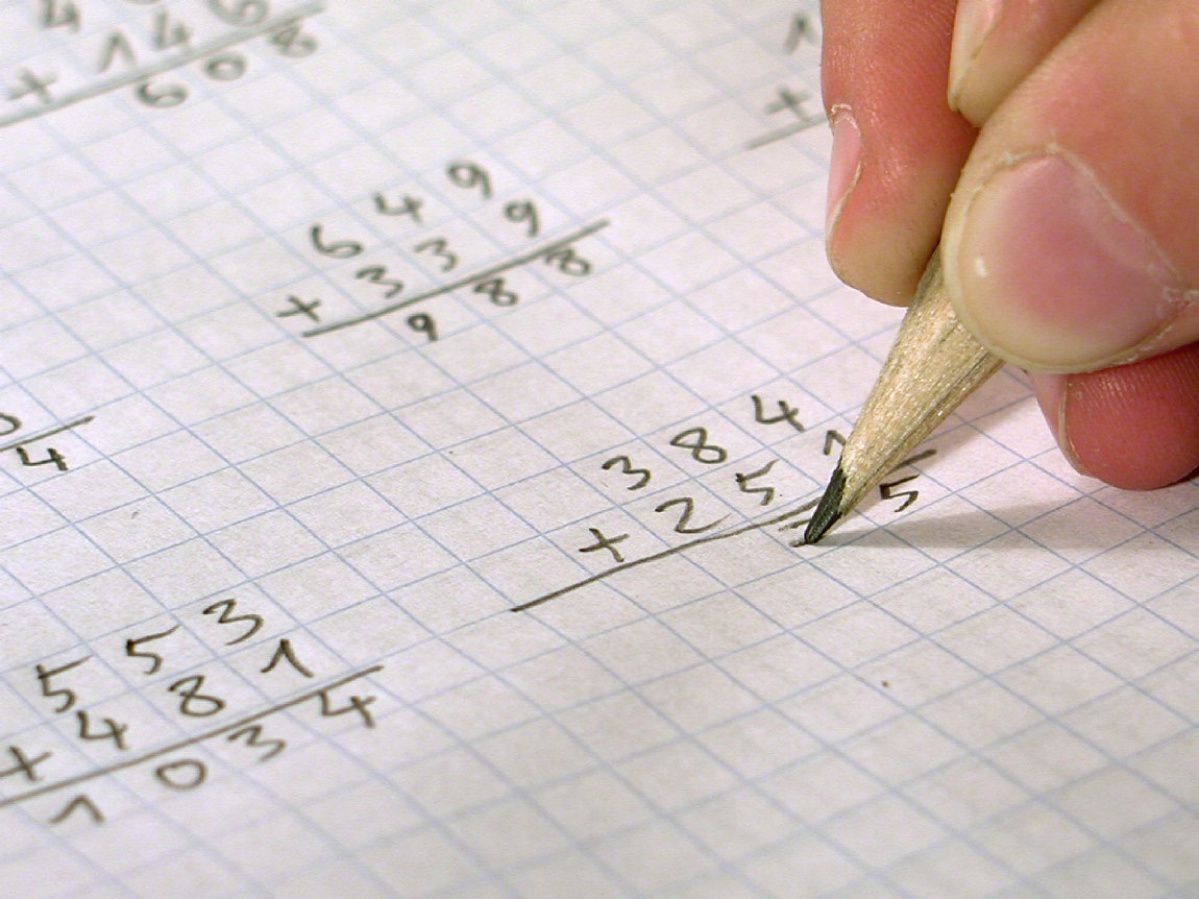 Do students really need math tuition when they have extra remedial or supplementary math classes in school? The short answer to this is “yes”, primary math tuition center Singapore lessons give several benefits over that of remedial classes in school. However, parents should note that these benefits are not always obvious and can be easily overlooked. Additionally, depending on the quality or teaching methodology of the tuition center, these benefits may or may not be applicable. In this article, we aim to raise awareness of the incremental value that math tuition classes offer amongst parents.
The first benefit is that of holistic mental development beyond that of merely formula application, by treating students as actual mathematicians. As strange as this may seem, the key to achieving this lies in not starting a topic with the formula to be applied but rather broad concepts that describe the problem to be solved. When students are not presented with a formula at the start, they are forced to consider the overall problem at hand and to string together variables and reasons in order to begin solving. In return, students develop not just a stronger conceptual understanding of the topic, but a logical capability required for solving tougher mathematics questions.
Another aspect that math tuition classes can explore more freely is that of relating lesson content to real life. Students get more excited about learning a topic when they are able to see the impact of the knowledge gained or to apply it to their daily activities. This removes the frustrating abstractness of mathematics and gives an extra bit of motivation to students to learn. An example of real life application may lie in area measurement and problem solving. Instead of giving a hypothetical question of how large a farmer’s field is on paper, tutors can get students to measure the actual size of the classroom wall, deduce the area of the room and explain how long an average individual would take to walk around the circumference without actually doing so.
The third benefit comes from improving setback handling capability and complimentary problem solving techniques. Rather than provide the right answer from the get go, the increased amount of time resource in tuition centers allow tutors to facilitate a productive struggle amongst students. This is done by providing as little information as possible while retaining a sufficient amount for students to remain productive. The consequent grappling of ambiguity and incremental build on initial ideas teaches students to not be overwhelmed by a challenging question. Instead, they learn to break it down and to solve one level at a time, taking what is given and building on it. In the long run, this helps students beyond just math exams at their current level, empowering them to challenge subjects such as physics and chemistry at secondary school level.
The post 3 Ways Math Tuition Classes Differ From School Lessons appeared first on Educational Star.
]]>