A Guide to Building Scientific Reasoning Skills Progressively from Sec 1 to Sec 2

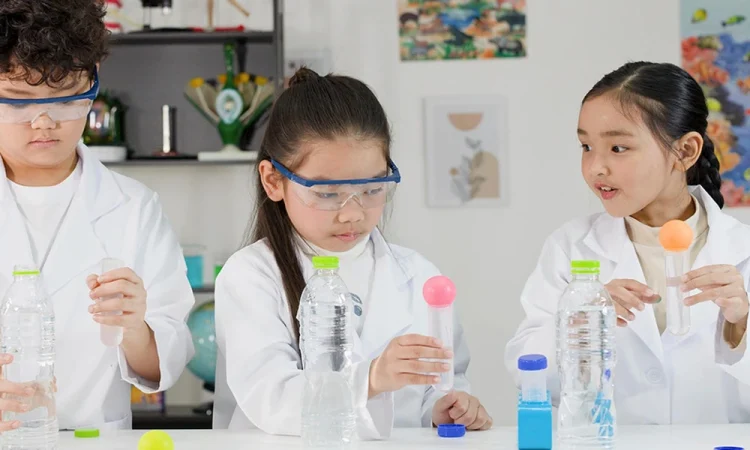
Lower secondary Science asks students to do more than remember facts. They are expected to ask questions, design fair tests, interpret results and explain what they observe using scientific ideas. These reasoning skills develop gradually, and the first two years of secondary school offer an important window to build them step by step. Whether a student learns mainly in class or with support from sec 1 science tuition, understanding how these skills progress helps students and parents focus on the right habits at the right time.
What Scientific Reasoning Involves
Scientific reasoning is the way scientists think through problems. At the lower secondary level, it usually includes these abilities:
- Asking questions that can be investigated through observation or experiment.
- Planning fair tests by changing one variable and keeping others constant.
- Recording observations and measurements accurately.
- Spotting patterns and trends in data.
- Explaining results using scientific concepts and models.
- Evaluating how reliable an experiment or conclusion is.
Building these abilities in a logical order makes each new skill easier to learn.
Secondary 1: Laying the Groundwork
The first year focuses on careful observation, clear recording and understanding how fair investigations work.
Asking Testable Questions
Students learn to turn general curiosity into questions that can be investigated, such as asking how temperature affects how quickly sugar dissolves rather than simply wondering why sugar disappears in water.
Observing and Recording Accurately
Reading scales correctly, using appropriate units and organising data in tables are essential early skills. Students who develop neat, consistent recording habits find later analysis much easier.
Understanding Fair Tests
Identifying the independent, dependent and controlled variables in an experiment is a key milestone in Secondary 1. Students who grasp why only one factor should change at a time are better prepared for more complex investigations.
Secondary 2: Deepening the Reasoning
Students in the second year build on these foundations by analysing results more critically and linking them to scientific ideas. Many students attending sec 2 science tuition spend much of their time on this shift, as questions increasingly ask for explanations rather than descriptions.
Analysing Data and Trends
Students learn to draw line graphs, describe trends using precise language and identify anomalies. They also begin to recognise the difference between correlation and cause, which is an important step towards more mature reasoning. Calculating simple rates or percentages from data also becomes more common at this stage.
Explaining With Scientific Models
Rather than simply describing what happened, students are expected to explain why, using models such as the particulate nature of matter or the movement of energy. Linking observations to these models helps students answer higher-order questions confidently. Practising short written explanations, using a clear sequence of cause and effect, can make these answers more precise and easier for examiners to follow.
Evaluating Experiments
Students start to consider sources of error, suggest improvements and judge whether a conclusion is supported by the evidence. Repeating measurements and calculating averages are introduced as ways to improve reliability. Students also learn to distinguish between errors that affect accuracy and those that simply reflect natural variation in measurements.
Supporting Progress at Home
Simple everyday activities can reinforce these skills. Asking “What do you think will happen?” before a kitchen experiment, discussing news stories about scientific discoveries or reviewing marked practical worksheets together all encourage students to think like scientists. Encouraging them to explain their reasoning aloud, even when they are unsure, builds the confidence to tackle unfamiliar questions.
Growing Confident Young Investigators
Scientific reasoning develops in stages, from asking testable questions and recording accurately in the first year of lower secondary to analysing trends, using models and evaluating experiments in the second. Building each skill on the last helps students approach investigations and exam questions with greater confidence.
Contact The Classroom to schedule a trial Science lesson to strengthen your child’s reasoning skills.